Understanding intellectual property protection
Patent, trademark, design or trade secret: which protection should you choose?
Sources consulted on
A project often brings together several assets: a technical solution, a name, an appearance, code, data and know-how. A patent protects part of this combination. The right strategy starts with identifying what gives you an advantage, then combining the appropriate forms of protection.
Your choice depends on the asset, what you are willing to disclose, the countries you target and the resources available to enforce your rights. Here is how patents fit alongside the main forms of intellectual property protection and the measures that complement them.
Start with what you want to protect
- Patent or utility model
Technical solution
- Will the innovation be visible or reproducible?
- Trade secret
Confidential know-how
- Can you actually keep it secret?
- Design
Appearance of a product
- Does its appearance create the value?
- Trademark
Name, logo or another distinctive sign
- Does the sign distinguish your offering, and is it available?
- Copyright
Text, image, software or another creation
- What original expression have you created?
- Specialised right
Database, plant variety, layout design or geographical origin
- Are the requirements of the specific regime met?
Forms of protection and how to choose them
Patent
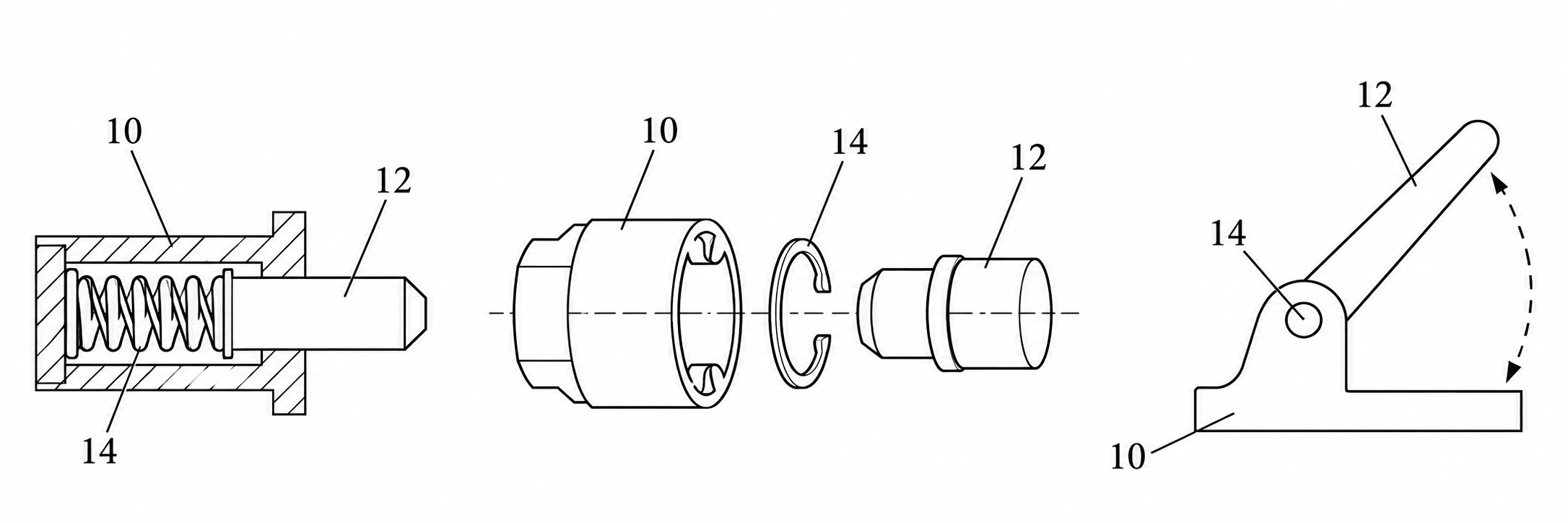
Protects a technical invention within the scope defined by its claims: for example, a product, device or process.
Selection criteria
- A solution that is new, involves an inventive step and is industrially applicable: these are among the requirements for a European patent.
- An advantage lasting long enough to justify filing, publishing the invention and enforcing the patent.
- A competitor’s use that you will be able to detect and document.
Scope of protection. A patent gives you the right to prevent exploitation of the invention in the protected territories. Its term is limited, and the invention must be disclosed sufficiently clearly and completely to be carried out. In France, for certain medicinal and plant protection products, a supplementary protection certificate can extend protection beyond the patent term if its specific requirements are met.
Example. A new dispensing mechanism, rather than the device’s trade name.
Official sources :European Patent Office [1]WIPO [2]USPTO [3]INPI [27]
Utility model
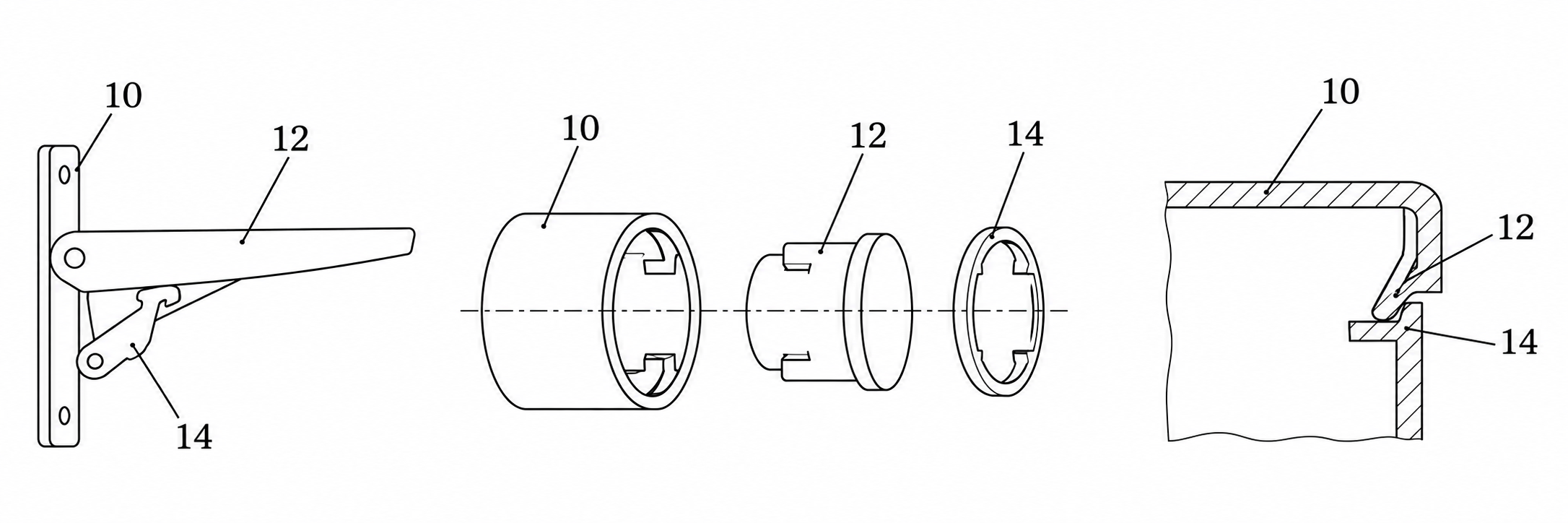
Offers technical protection in countries that provide this type of right. It may suit a product improvement and a short commercial life cycle.
Selection criteria
- The target country offers utility models, and your subject matter is eligible.
- The local timetable, cost and term fit your market.
- Validity requirements have been checked, even if registration takes place without full examination.
Scope of protection. Requirements and eligible subject matter vary by country. In systems without substantive examination, prepare the validity analysis needed to enforce the right. In France, the utility certificate meets the same patentability requirements as a patent, with a maximum term of ten years. In the United States, “utility patent” means a patent for an invention.
Example. A mechanical improvement intended for a few selected markets.
Trade secrets and know-how

Protects information that has commercial value because it is secret, is known to a limited group and is subject to reasonable confidentiality measures.
Selection criteria
- The know-how remains difficult to observe or reconstruct from the product sold or from public documents.
- You can restrict access, manage staff departures and control exchanges with your partners.
- The value of the know-how justifies ongoing management of its confidentiality.
Scope of protection. Protection can last as long as its requirements remain met. It does not prevent independent discovery or lawful reverse engineering. Compare that risk with the disclosure required by a patent.
Example. Manufacturing parameters or an internal calibration method.
Official sources :WIPO [7]WIPO [8]European Union [29]
Design
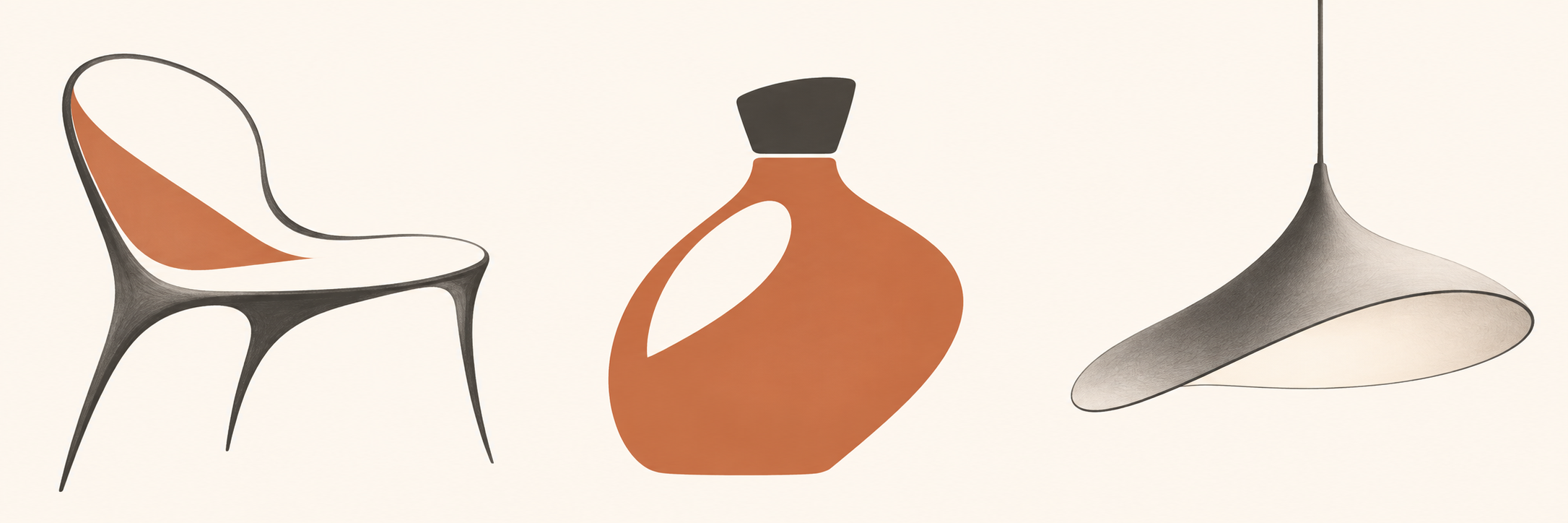
Protects a product’s appearance: its lines, contours, shape, colours or ornamentation. It complements a patent when visual appeal matters as much as technology.
Selection criteria
- Appearance is an identifiable part of what sets your product apart.
- It meets the territory’s requirements; in the European Union, novelty and individual character.
- Important variants and the disclosure timetable are considered before filing.
Scope of protection. This right covers a product’s appearance. In the European Union, a registered design is renewable for up to twenty-five years. An unregistered design protects against copying for three years from a disclosure meeting that regime’s requirements; independent creation remains possible. In the European Union, features of appearance solely dictated by a product’s technical function are excluded from protection.
Example. The outline of a housing, a graphical user interface or a surface pattern.
Official sources :EUIPO [9]EUIPO [10]EUIPO [33]
Trademark

Protects a sign that identifies the commercial origin of goods or services: for example, a name, logo or, subject to requirements, a shape or sound.
Selection criteria
- The sign is distinctive, rather than simply descriptive of the offering.
- A clearance search covers relevant earlier rights.
- The goods, services and territories covered by the application match your development plans.
Scope of protection. A trademark does not protect an invention or the contents of software. Protection can be renewed; use and monitoring need to be organised under the applicable rules.
Example. The name under which you market a range of devices or a digital service.
Copyright, software and related rights

Protects the original expression of a creation: text, images, videos, music, software code or documentation. Related rights cover, in particular, performers and producers of recordings.
Selection criteria
- For copyright, identify the original work and its authors; for related rights, identify the relevant performance, recording production or broadcast.
- You retain dated versions and evidence of creation.
- Contracts and licences allow the intended uses, including for external contributions.
Scope of protection. Copyright generally arises without registration and covers original expression. Ideas, methods and functionality require a separate analysis. At the EPO, a computer-implemented invention may be patentable if it meets the technical and other patentability requirements; a program “as such” is excluded.
Example. An application’s code, its manual and original illustrations.
Official sources :WIPO [13]WIPO [14]WIPO [15]European Union [30]European Patent Office [31]
Databases: two distinct forms of protection

In the European Union, an original selection or arrangement may qualify for copyright. A separate “sui generis” right covers certain substantial investments in a database.
Selection criteria
- For the sui generis right, document investment in obtaining, verifying or presenting the contents.
- Distinguish that investment from expenditure on creating the data themselves.
- Check eligibility for the regime and the rights in any reused contents.
Scope of protection. This European regime does not create a general monopoly over facts or data. It governs, in particular, the extraction or re-utilisation of a substantial part of the protected database.
Example. A directory enriched through the systematic collection and verification of existing information.
Official sources :European Union [16]Court of Justice of the European Union [17]
Plant variety protection
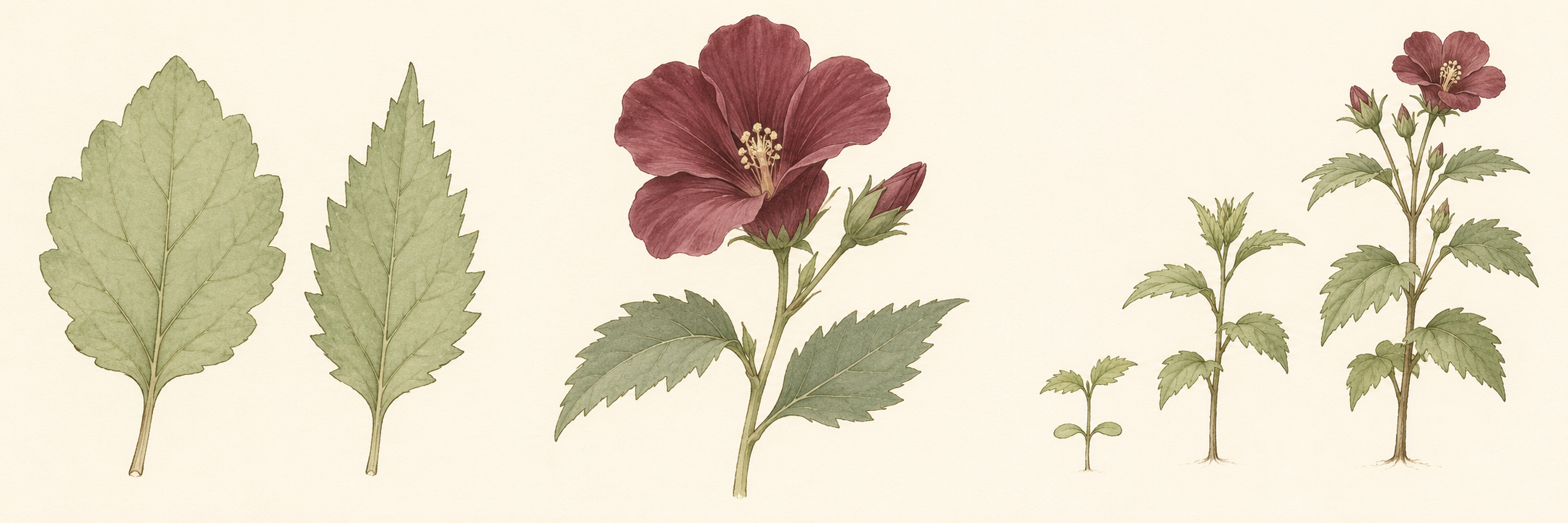
A plant breeder’s right protects a variety that meets the requirements of the relevant regime. It addresses plant breeding through a specialised procedure.
Selection criteria
- The variety is new, distinct, uniform and stable.
- It has a suitable denomination and can be assessed under the applicable procedure.
- Production and marketing territories justify the protection sought.
Scope of protection. This right is distinct from a patent covering a biotechnological invention. Their scope, reserved acts and exceptions need separate examination in the target countries.
Example. A new horticultural variety resulting from a breeding programme.
Official sources :UPOV [18]Community Plant Variety Office [19]
Integrated circuit layout design

Specific protection may cover the original arrangement of the elements and interconnections of an integrated circuit: its layout design, also called its topography.
Selection criteria
- The layout results from intellectual effort and is not commonplace in the sector.
- You can identify the creators, files and the company’s rights.
- Local formalities and deadlines relating to exploitation or registration are met.
Scope of protection. Layout design protection does not reserve every electronic function of the component. A patent may cover a distinct technical innovation, while trade secrets may safeguard certain manufacturing processes.
Example. The original arrangement of elements in a circuit designed for a sensor.
Official sources :WIPO [20]
Geographical indication

Identifies a product whose quality, reputation or other characteristic is linked to its geographical origin. Protection rests on that link and on defined production requirements.
Selection criteria
- The link between the product and the territory can be demonstrated.
- The producers concerned can establish and comply with a product specification.
- The target regime covers the product category and the relevant markets.
Scope of protection. Use of the protected indication is open to producers who meet the regime’s requirements and the product specification. In the European Union, a registration system has also covered craft and industrial products since 1 December 2025.
Example. The geographical name of a product whose reputation is linked to local know-how.
Official sources :WIPO [21]EUIPO [22]European Union [32]
Seven questions to choose your combination
What creates value?
List technology, appearance, brands, creative works, data and know-how separately. A product does not necessarily call for a single form of protection.
What will you make public, and when?
Before a demonstration, sale or publication, decide what needs filing or keeping confidential. Do not assume that a grace period exists in every country.
Where do you need protection?
Consider markets, manufacturing locations, competitors and sales channels together. An international strategy is built territory by territory, using the available filing routes.
Who owns the rights?
Check founders, employees, contractors, partners and component licences. Keep the evidence and agreements that establish your chain of ownership.
Will copying be detectable?
Identify what you will be able to observe: a purchased product, accessible code, documentation or an internal process. That visibility affects the choice between patents and trade secrets and the cost of evidence.
What is the budget over time?
Compare preparation, filings, procedures, maintenance, monitoring and enforcement. Prioritise the assets and countries that support your business model.
Can you commercialise your offering?
Distinguish a patentability assessment from a freedom-to-operate analysis: the latter examines third-party rights applicable to the product and target countries, including when you hold rights of your own.
Example: several protections for one connected sensor
Each layer addresses a different risk. For an industrial sensor, a combination to consider could be:
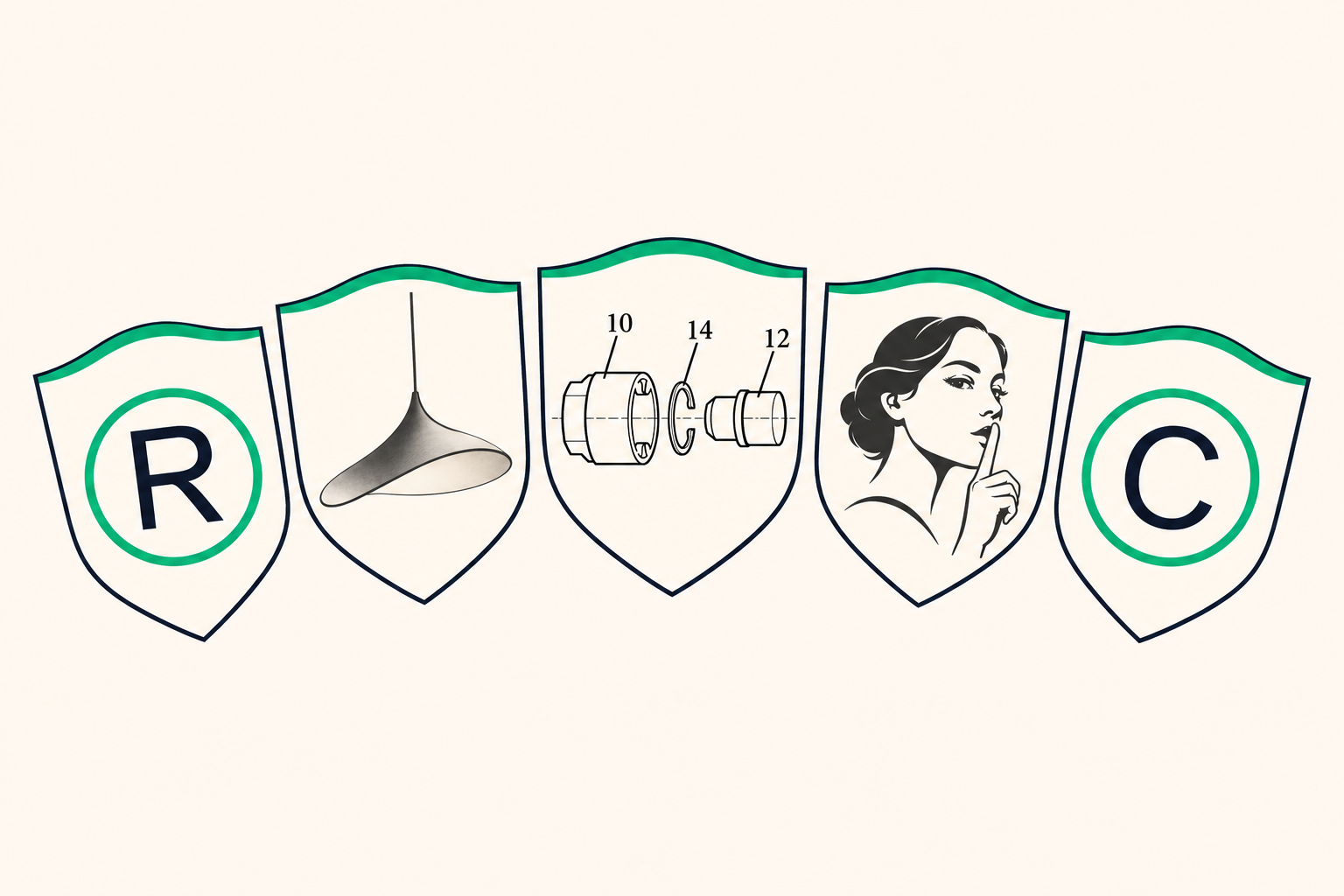
- Innovative measuring mechanism
- Patent, if the patentability requirements are met.
- Housing shape
- Design protection for the eligible appearance.
- Range name
- Trademark, following a clearance search.
- Code and manual
- Copyright, with a documented chain of ownership.
- Internal calibration parameters
- Trade secrets, with controlled access and exchanges.
Combining rights can protect technology, identity and internal assets. Select the layers that serve the business and coordinate them from the design stage.
Official sources :WIPO [26]
Complementary measures to organise
Company names, trade names and domain names
These identify the business, its activity or its online address. Their effects vary by country and use; reserving a domain does not replace trademark registration. In France, the company name, trade name and business sign have distinct functions and scope. Coordinate their availability with that of your trademark.
Official sources :INPI [23]
Contracts and unfair competition

Confidentiality agreements, assignments, licences and development contracts establish ownership, access and permitted uses between the parties. Contractual obligations bind the parties; they differ from an exclusive right enforceable against everyone. Unfair competition law may sanction certain unfair commercial practices, such as creating confusion, under the applicable law; it does not automatically reserve an unprotected idea.
Defensive publication
Making a solution publicly accessible can create prior art that can be cited against later patent applications. This is a disclosure strategy, not an exclusive right. It involves accepting the loss of secrecy and may jeopardise your own filings. Choose it after deciding what you want to keep confidential, patent or make openly available.
From choosing protection to budgeting for patents
If patents are part of your strategy, next compare filing scenarios and territories. PATFEE helps you estimate the budget for an international patent family; other forms of protection need their own cost estimates.
Estimate my patent family budget →